

Summary
A Prothom Alo investigation reveals that at least 14 pirate gangs have re-activated across the Sundarbans, despite a high-profile government surrender program in 2018.
These groups, including the new “Dulabhai Bahini,” are kidnapping fishermen and forest-dependent communities, demanding ransoms from $180 to over $900.
The resurgence is facilitated by a network of powerful fish and crab traders, known as “Company Mahajans,” who fund the pirates for control over fishing territories, often using illegal poison-fishing methods.
This threatens local livelihoods, state revenue, and the fragile ecosystem of the UNESCO World Heritage site.
Context
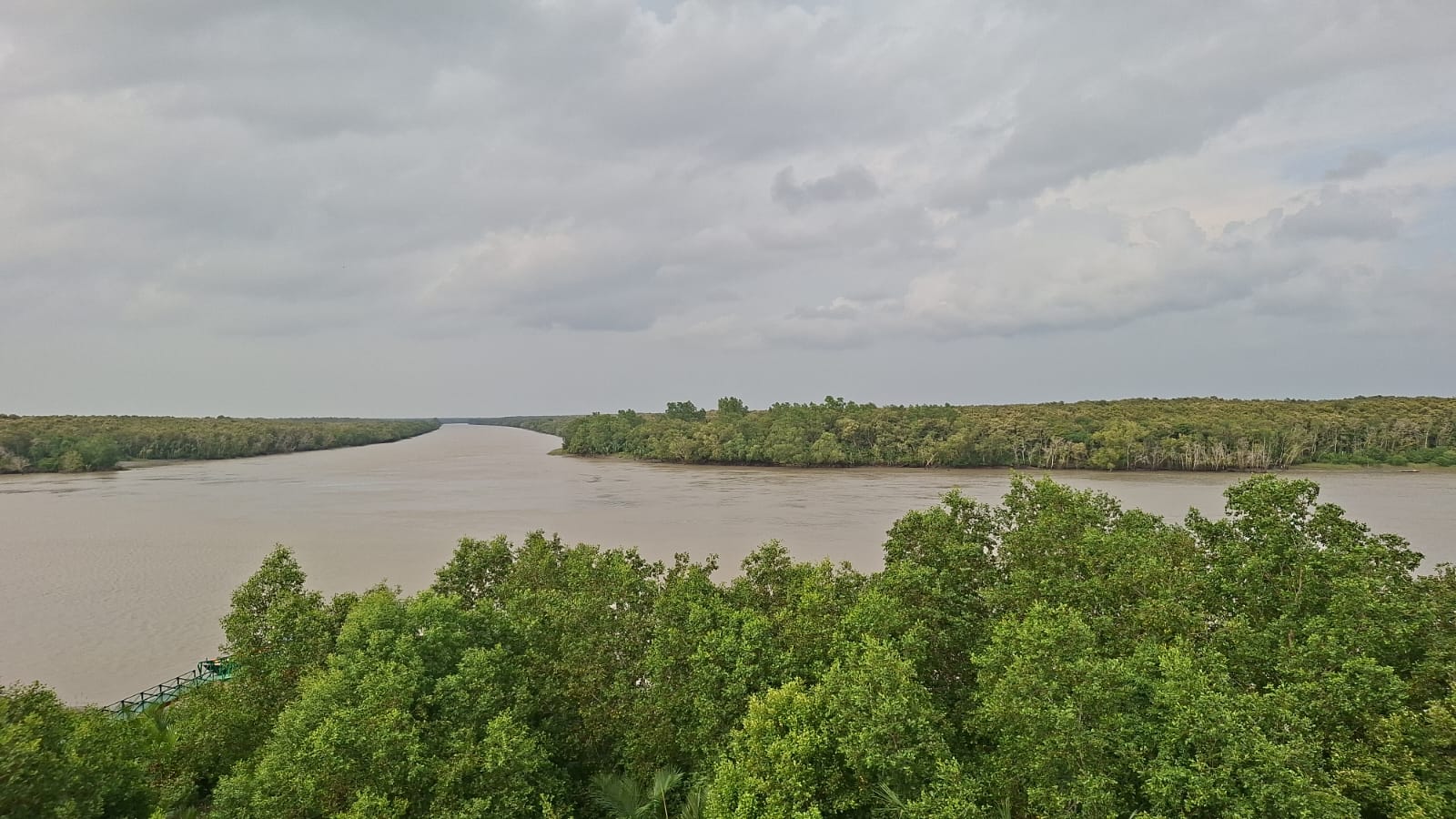
The Sundarbans, a UNESCO World Heritage site of immense ecological and economic value, has long been vulnerable to piracy targeting fishermen, honey collectors, and crab catchers. In 2018, 328 pirates from 32 gangs surrendered in a landmark initiative hailed as the forest’s liberation. Yet experts cautioned at the time that unless robust rehabilitation and livelihood schemes were sustained, recidivism was likely. Those warnings have materialised: current political volatility and post-election uncertainty have created conditions for criminal networks to regroup.
Local media have repeatedly raised questions about the durability of the “pirate-free” declaration, citing community fears that surrendered groups were left without alternatives. Reports also point to the role of “company mahajans” — powerful traders accused of financing and directing gangs, while promoting destructive fishing methods such as poison use. These practices not only fuel piracy but also undermine biodiversity and the coastal economy.
Official sources, including the Coast Guard and RAB, continue to confirm the scope of the problem through frequent press releases announcing arrests, weapon recoveries, and intelligence-driven raids. A recent RAB statement went further, acknowledging that “influential quarters” are actively enabling forest crimes. Together, these accounts underscore that the resurgence of banditry is not merely a law-and-order issue but one tied to governance gaps, ecological exploitation, and broader socio-political instability.
Editorial Intelligence Report
- Editorial Angle
- Source Credibility
- Ideological Leaning
- Sentiment
- Balance of Reporting
- Primary Sources Used
- Tone & Language
- Headline Accuracy
- International Relevance
- Watch Points (Bias/Risk)
| Investigative. The piece is a deep dive into a systemic failure, uncovering the nexus between criminals, business interests, and the challenges faced by law enforcement. |
| High. Prothom Alo is Bangladesh’s leading and most respected Bengali-language daily, known for its investigative journalism. The report is based on extensive field work, includes named and anonymous sources from multiple sides (victims, pirates, officials), and is authored by a staff correspondent. |
Neutral. The reporting is fact-based and focuses on governance, security, and environmental issues without apparent political bias.
Negative / Alarmist. The tone is rightfully concerned, highlighting the severe risks to human security, ecology, and the economy.
Balanced. The report quotes victims, active and former pirates, local NGOs, and law enforcement officials (Coast Guard, Police, Forest Department). It also includes denials from the alleged Company Mahajans.
Eyewitnesses (victims, fishermen), Anonymous Sources (active pirates, Company Mahajans), Govt Officials (Forest Dept, Police, Coast Guard), NGOs (Coastal and Sundarbans Protection Movement).
Formal but gripping and descriptive, using narrative techniques to humanize the story while maintaining journalistic rigor.
Reflects content. The original Bengali headline accurately captures the core finding: surrendered pirates are returning to banditry.
Medium-High. The Sundarbans is a UNESCO World Heritage site and a critical barrier against climate change-induced cyclones. Issues of environmental destruction, transnational crime (potential arms smuggling), and human security are of interest to global environmental agencies, regional security analysts, and human rights organizations.
- Risk of sensationalism due to the dramatic nature of the subject, though the reporting is controlled.
- Heavy reliance on anonymous sources due to security risks is necessary but requires reader awareness.
- The report could be perceived as critical of the government’s 2018 “declaration of success.”
Business Implications
- Livelihood & Economic Security: The extortion racket directly threatens the core economic activity in the Sundarbans. Increased risk premiums and “protection money” will raise the cost of operations for legitimate fishermen, potentially leading to increased seafood prices and reduced export competitiveness for Bangladeshi crab and shrimp.
- Environmental Risk: The alleged use of poison by networks linked to the pirates poses an existential threat to the Sundarbans’ aquatic ecosystem. This could trigger international environmental advocacy group pressure and scrutiny from UNESCO, potentially impacting Bangladesh’s green credentials and access to certain climate funds.
- Security & Governance: The resurgence indicates a failure in the post-surrender rehabilitation and monitoring process. It exposes vulnerabilities in governing remote, complex geographies. For diplomats and investors, this serves as a case study in the challenges of sustaining security gains and the power of local oligarchic networks (“Company Mahajans”).
- Operational Risk for Development Projects: NGOs and international agencies working on climate resilience or conservation projects in the Sundarbans region may face heightened security risks, requiring revised operational plans and increased security budgets.
- Reputational Risk: The narrative of a “pacified” Sundarbans is crumbling. This could marginally impact the tourism sector if the perception of lawlessness grows, though tourism is currently concentrated in safer northern areas.
Potential Angles to Monitor
- Tracing the Money: Investigate the financial flows from the “Company Mahajans” to the pirates. Which banks are used? How are the mobile financial service transactions (like bKash) structured?
- The Arms Pipeline: A deeper investigation into the mechanics of the illegal arms trade, identifying the specific shops and “blackers” in Khulna and elsewhere supplying weapons to the gangs.
- Rehabilitation Audit: A data-driven assessment of the government’s pirate rehabilitation program. How many of the 328 surrendered pirates are in stable jobs? How many have re-offended? Where did the rehabilitation funds actually go?
- Shadow Economy: Profile the top ten “Company Mahajans” named in the report, mapping their business empires, political connections, and any existing legal cases against them.
- International Nexus: Explore any cross-border connections with criminal networks on the Indian side of the Sundarbans, including potential coordination or conflict.
Frequently Asked Questions
Related Headlines
UNESCO – Sundarbans Page for information on the international significance and conservation outlook of the region.
The Business Standard – How the Sundarbans pirates changed their way
BSS – Police offers Tk 10,000 reward for information on Sundarbans pirates
The Daily Sun – Pirates resurge in Sundarbans, Bay of Bengal