

Summary
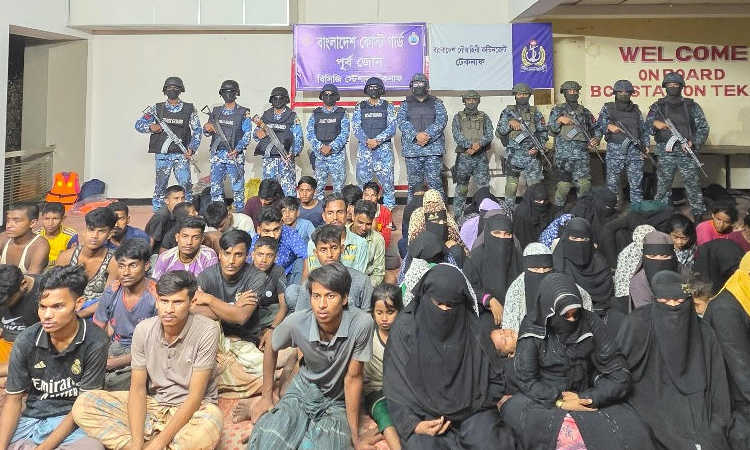
In combined operations across Teknaf, Bangladesh’s security forces rescued more than 150 individuals from trafficking networks—including 83 survivors from one hideout and an additional 66 people from a separate coastal-area raid—reports Bangla Tribune and Prothom Alo.
Many were Rohingya refugees, others Bangladeshi, lured by promises of jobs or smuggled abroad, or abducted and held for ransom.
The BGB, RAB, coast guard and navy coordinated raids in remote Kachhapia hills and coastal forests, arresting several traffickers, recovering weapons, and disrupting syndicates.
Authorities say over 60 traffickers have been arrested so far this year in Teknaf.
Context
This incident is not isolated but a symptom of a deep-rooted and escalating crisis in Southeast Bangladesh. Corroborating reports from other credible sources paint a grim picture:
Historical and Regional Dimension: The Bay of Bengal has been a notorious trafficking route for a decade. The shift to fortified land-based “holding camps,” as described in this report, indicates an adaptation by criminal networks to increased maritime patrols. This model, involving kidnapping-for-ransom and sale-between-gangs, points to a sophisticated and brutal illicit economy. The UN Office on Drugs and Crime (UNODC) has previously documented similar patterns in the region.
Systemic Problem, Wider Crackdown: While Bangla Tribune broke this specific story, other national outlets like The Daily Star and Dhaka Tribune have reported that this raid is part of a significant surge in anti-trafficking operations. Their reporting confirms that in the week preceding this event, law enforcement rescued 177 people from similar hideouts in the Cox’s Bazar hills and waterways, arresting at least 60 alleged traffickers.
The Rohingya Vulnerability Factor: The high number of Rohingya victims (66 out of 84) is a critical detail. Analyses by Refugees International and reports from AFP consistently highlight that dire conditions in the overcrowded camps, cuts in international aid, and a protracted lack of repatriation prospects make refugees exceptionally vulnerable to trafficking networks offering false promises of passage to Malaysia.
Editorial Intelligence Report
- Editorial Angle
- Source Credibility
- Ideological Leaning
- Sentiment
- Balance of Reporting
- Primary Sources Used
- Tone & Language
- Headline Accuracy
- International Relevance
- Watch Points (Bias/Risk)
| Objective / Investigative. The piece objectively narrates the event while investigating the trafficking network’s methods and scale. |
| High. The analysis is based on consecutive reports from Bangladesh’s two most credible and high-circulation news outlets, Prothom Alo and Bangla Tribune. |
Neutral. The reporting is factual, focusing on human suffering and law enforcement action without apparent political bias.
Negative / Alarmist. The tone is understandably negative, detailing horrific crimes. It carries an alarmist undertone by citing the traffickers’ claims that “hundreds” remain captive, emphasizing the ongoing scale of the crisis.
Balanced. Includes victim testimonies, official security force statements, and a response from the implicated hotel’s owner, providing multiple angles.
Eyewitness/Victims, Government Officials (BGB/RAB), Anonymous law enforcement sources.
Formal with Sensational Elements. The language is largely formal but uses dramatic phrases like “an empire of darkness” and “escaping the jaws of death” to heighten narrative impact.
Reflects content. The original Bangla headlines accurately summarizes the core event.
High. This involves transnational organized crime, human rights abuses, and the regional Rohingya refugee crisis, engaging UN agencies, foreign governments, and international human rights organizations.
- Heavy reliance on victim testimony and security briefings;
- The official narrative is prominent;
- Caims about the involvement of “local representatives” require further independent verification.
- Limited independent verification of trafficking networks
Business Implications
- Tourism Sector Risk: For economic analysts, this incident poses a direct threat to Cox’s Bazar’s tourism revival. The kidnapping of a domestic tourist from a hotel necessitates a visible government security overhaul to maintain investor and visitor confidence in one of Bangladesh’s key tourist destinations.
- Donor & Diplomatic Relations: For diplomats and NGOs, this underscores the failure of current measures to protect Rohingya refugees. It will increase pressure on Dhaka to improve camp security and on international donors to bolster humanitarian aid and support sustainable solutions, potentially affecting aid conditionality and bilateral dialogues.
- Law Enforcement Assessment: The successful joint BGB-RAB operation demonstrates tactical capability. However, the admission of large, active trafficking groups and multiple hidden camps suggests a significant intelligence and capacity gap. Watchers should assess if this leads to a sustained, resource-backed strategy or remains a reactive firefighting approach.
- Regional Security Threat: For South Asia editors and think-tanks, this highlights a potent cross-border security challenge. The mention of international kingpins indicates a network requiring regional intelligence-sharing and joint operations, impacting regional diplomacy and security cooperation forums.
Potential Angles to Monitor
- Profile the 15–20 escaped traffickers from recent raids — their networks, origin, and known associates.
- Investigate complicity: role of local hotels, transport operators, or camp leaders in facilitating trafficking.
- Aftercare & long-term support for rescued individuals — how are survivors rehabilitated, reintegrated, or protected?
- Trends over time: compile data on rescues and arrests in Teknaf over the past 5 years to identify patterns or escalation.
- Regional ties: track cross-border routes and coordination with Malaysia, Thailand, and possible involvement of foreign syndicates.
- Structural solutions: analyze policy proposals, legal gaps, and institutional constraints in Bangladesh’s anti-trafficking framework.
Frequently Asked Questions
Related Headlines
Bangla Tribune (Original Report): কক্সবাজারে ঘুরতে এসে পাহাড়ি আস্তানায় বন্দি, একজনের তথ্যে ৮৩ জন উদ্ধার
Prothom Alo: 66 rescued in joint Coast Guard-Navy operation in Teknaf
UNHCR Bangladesh: For official updates on the Rohingya refugee situation and protection efforts. https://www.unhcr.org/bd.html
International Organization for Migration (IOM) Bangladesh: For information on counter-trafficking programs and migrant protection. https://bangladesh.iom.int/
Human Rights Watch (HRW): For in-depth reports on human rights abuses affecting refugees and trafficking victims in the region.