

Summary
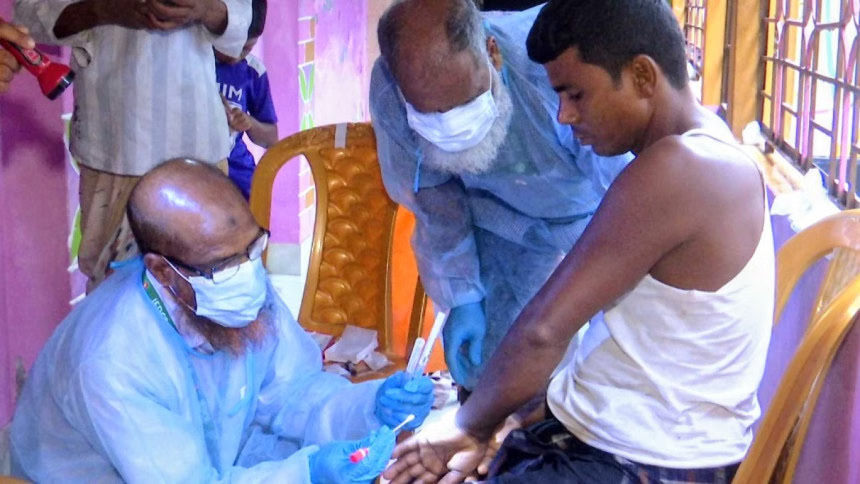
An anthrax outbreak has been confirmed in Rangpur’s Pirgachha upazila, reports BBC Bangla and The Daily Star. The Institute of Epidemiology, Disease Control and Research (IEDCR) confirmed eight human cases.
The infection likely spread from handling or consuming beef from sick cattle. Two recent deaths with anthrax-like symptoms caused panic, though no lab confirmation was possible.
Officials also found anthrax bacteria in frozen beef samples. Over 150,000 cattle have been vaccinated as a precaution, while public awareness drives target butchers and farmers.
Health experts stress anthrax is treatable if diagnosed early and does not spread between humans.
Context
Anthrax, a zoonotic bacterial infection, recurs sporadically in Bangladesh’s northern districts. Major outbreaks were reported in 2010 and 2015, prompting IEDCR to launch nationwide surveillance in 2018. The current cluster in Pirgachha began in August 2025, when villagers slaughtered visibly sick cattle. Subsequent testing of patients and frozen meat confirmed Bacillus anthracis. While two individuals—Abdur Razzak and Komola Begum—died after exposure to diseased cows, their cases remain unconfirmed due to lack of samples.
Bangladesh’s rural livestock economy is vulnerable to anthrax because farmers often sell or slaughter sick animals to avoid financial loss. Globally, anthrax remains a controlled but persistent zoonotic risk, especially in South Asia and Africa. Though human-to-human transmission is not possible, public panic often rises during outbreaks. International health bodies, including the WHO, highlight vaccination of livestock and safe disposal of carcasses as essential to prevention.
Editorial Intelligence Report
- Editorial Angle
- Source Credibility
- Ideological Leaning
- Sentiment
- Balance of Reporting
- Primary Sources Used
- Tone & Language
- Headline Accuracy
- International Relevance
- Watch Points (Bias/Risk)
Objective / Public Health-Focused – The reporting prioritizes official data and expert commentary to inform without causing undue alarm.
High — BBC Bangla and The Daily Star both cite IEDCR, district health officers, and livestock officials.
Neutral. The reporting is factual and centers on public health and veterinary response, avoiding political or social commentary.
Concerned but Reassuring – Acknowledges the outbreak and initial public panic but consistently underscores the disease’s treatability and the effectiveness of containment measures.
Balanced – Presents the outbreak facts, includes official actions (vaccination, awareness), and incorporates expert risk assessments.
Government Health Officials, Livestock Department Officials, Public Health Experts, Laboratory Results.
Formal / Informative – The language is clear and direct, explaining medical and administrative details for public understanding.
Reflects content – The provided headlines accurately summarize the confirmed cases and the ongoing situation.
Medium — Relevant for global health watchers monitoring zoonotic outbreaks, food safety, and public health systems in South Asia.
- Risk of overstating panic based on unconfirmed deaths.
- Limited grassroots voices (farmers, victims) included.
- Potential underreporting if cases spread to other districts.
Business Implications
- Food Safety & Export Risks: Though Bangladesh exports little beef, outbreaks affect consumer confidence and could impact regional livestock trade.
- Livelihood Disruptions: Small farmers risk financial loss if sick cattle cannot be sold. Compensation schemes may become a policy necessity.
- Healthcare Costs: Local clinics face extra burden, requiring antibiotics and diagnostics, straining rural health budgets.
- Diplomatic/Donor Engagement: Development partners like FAO and WHO may push for stronger One Health surveillance, bringing technical assistance but also external scrutiny.
- Investor Confidence: Recurrent zoonotic outbreaks can affect Bangladesh’s image in agricultural productivity, livestock insurance, and rural resilience.
Potential Angles to Monitor
- Interviews with Farmers — Economic impact of losing cattle to anthrax.
- Livestock Officers — Effectiveness of vaccination drives and gaps in rural veterinary systems.
- Public Health Experts — Why anthrax persists despite previous outbreaks and surveillance.
- Victim Families — Human stories behind cases, especially where deaths remain “unconfirmed.”
- International Agencies (FAO/WHO) — Technical evaluation of Bangladesh’s animal-human health preparedness under One Health framework.
Frequently Asked Questions
Additional Reading
U.S. Centers for Disease Control and Prevention (CDC) – Anthrax: Types, Symptoms, & Prevention
Johns Hopkins Bloomberg School of Public Health – Anthrax as a Biological Weapon
ICDDR’B – Anthrax outbreak in the northern districts of Bangladesh (2011)
National Center for Biotechnology Information (NCBI) – Bangladesh anthrax outbreaks are probably caused by contaminated livestock feed
The Daily Star – Two die of anthrax-like symptoms in Rangpur
Frontiers – Risk factors associated with cutaneous anthrax outbreaks in humans in Bangladesh
International Journal of Infectious Diseases (IJID) – Climate change and its influence on occurrence and distribution of Anthrax in Bangladesh