

Summary
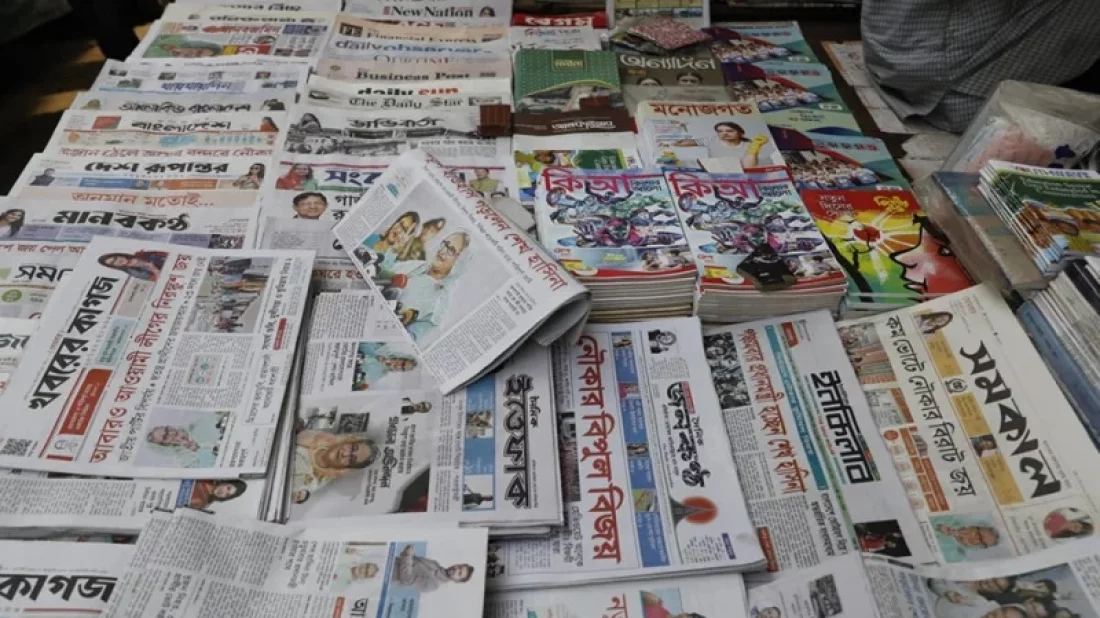
Bangladesh’s leading newspapers are reeling from over Tk209 crore (≈$17.5 million) in unpaid advertising bills, mostly owed by government agencies, reports Dhaka Tribune.
Data from 19 major dailies show The Daily Star (Tk26cr/$2.17m) and Jugantor (Tk25cr/$2.09m) facing the worst losses.
Editors blame chronic bureaucratic delays and a flawed ad allocation system that rewards defunct or low-circulation papers.
The mounting dues have forced media houses to delay staff salaries, slash newsroom budgets, and scale back investigative reporting — posing a grave threat to press freedom and the financial survival of Bangladesh’s already fragile newspaper industry.
Context
The media industry in Bangladesh has long been heavily reliant on advertising revenue, particularly from government ministries and state-owned enterprises. The current backlog of over Tk209 crore is not an isolated incident but a symptom of a chronic, systemic issue.
The problem is twofold. First, government payments are notoriously slow, entangled in bureaucratic red tape with no central tracking system. The Department of Films and Publications (DFP) alone recently held ~Tk36 crore in dues, some dating back over a decade.
Second, the system is distorted by a flawed DFP media list that includes newspapers with little to no actual circulation, forcing legitimate outlets to compete unfairly for essential state advertising.
This crisis is set against a broader backdrop of a 30-40% overall decline in advertising, exacerbating the financial strain.
Historically, the media reform commission under the inteirm government highlighted these issues, recommending a revision of outdated ad rates and a more equitable disbursement system, but tangible action remains elusive.
Editorial Intelligence Report
- Editorial Angle
- Source Credibility
- Ideological Leaning
- Sentiment
- Balance of Reporting
- Primary Sources Used
- Tone & Language
- Headline Accuracy
- International Relevance
- Watch Points (Bias/Risk)
Objective / Economic Analysis – The Dhaka Tribune focuses on verified data, industry voices, and expert commentary rather than political blame.
High – Draws on multiple on-record editors, commission members, and ministry officials; published by a credible English-language daily with transparent sourcing.
Liberal / Reformist – Advocates transparency and fair media governance; implicitly critical of bureaucratic inefficiency.
Alarmist / Concerned – Highlights existential threat to newspaper sustainability and press freedom.
Balanced – Features editors, media experts, and ministry insiders, though official government spokesperson response is limited.
Editors, DFP officials, Ministry of Information insiders, Media Reform Commission report, university experts.
| Formal / Analytical – Clear, professional writing aimed at policy and media professionals. |
| Formal and Concerned – The language is professional but frames the situation as a critical emergency. |
Reflects content – It accurately captures the core financial distress and its cause.
Medium — This is a case study in media sustainability, press freedom, and the risks of state-dependent revenue models, relevant for global media analysts and democracy watchdogs.
- Mild risk of implicit anti-government framing
- Limited quantitative verification beyond newsroom self-reporting
- Reliance on anonymous sources from affected organizations
Business Implications
- Media Viability and Democratic Risk: The unpaid ad crisis poses a dual threat: financial instability for newspapers and erosion of independent journalism. Persistent arrears weaken editorial independence, pushing outlets toward self-censorship to secure state favor or alternative funding — a long-term democratic risk.
- Market Distortion and Regulatory Vacuum: The lack of a centralized ad-payment registry enables manipulation, ghost circulation reporting, and clientelism. For advertisers, this erodes credibility in media audience metrics, deterring private-sector spending. Media agencies may redirect budgets toward digital platforms, accelerating print’s decline.
- Economic Ripple Effects: An estimated 15,000–20,000 jobs in print media (journalists, printers, distributors) are indirectly threatened. Newspapers may delay salaries or shut regional bureaus, affecting rural coverage. If unpaid bills persist, layoffs could rise.
- Government Accountability and Reputation Risk: For the Muhammad Yunus-led interim government, this crisis tests its pledge to “restore institutional fairness.” International partners monitoring media freedom — such as Freedom House, RSF, and UNDP — may interpret prolonged inaction as tacit state control through fiscal dependency.
- Investor and Diplomatic Concerns: For investors, the media sector’s instability signals weak rule of law and poor contract enforcement. Diplomats and donors may view this as symptomatic of Bangladesh’s broader governance challenge — a key indicator for economic and political risk assessments.
- Opportunities for Reform: Introducing a Central Advertising Payment Authority (CAPA) and revising ad rates could restore trust. Donor-funded programs promoting media viability, financial transparency, and circulation auditing would attract both international attention and policy leverage.
Potential Angles to Monitor
- Policy Side – Interview Information Ministry officials and DFP leadership on plans for centralized ad billing.
- Editorial Perspective – Roundtable with Editors’ Council members (The Daily Star, Financial Express, Prothom Alo) on newsroom survival strategies.
- Economic Impact – Speak with industry associations (Newspaper Owners’ Association of Bangladesh – NOAB) and ad agencies about cash-flow bottlenecks.
- Regulatory Reform – Seek expert views from Media Reform Commission and Dhaka University journalism professors on sustainable ad policies.
- Labor Dimension – Interview journalists’ unions about salary delays and job insecurity in struggling outlets.
- Comparative View – Engage with South Asia Media Solidarity Network for regional parallels and best practices.
Frequently Asked Questions
Additional Reading
Dhaka Tribune – Newspapers suffocating under 209C unpaid ad bills
United News Bangladesh – Newspaper owners demand payment of outstanding advt bills
Financial Express – Local ad market shifting to digital media, traditional media getting marginalised
Reporters Without Borders – Bangladesh Country Profile