

Summary
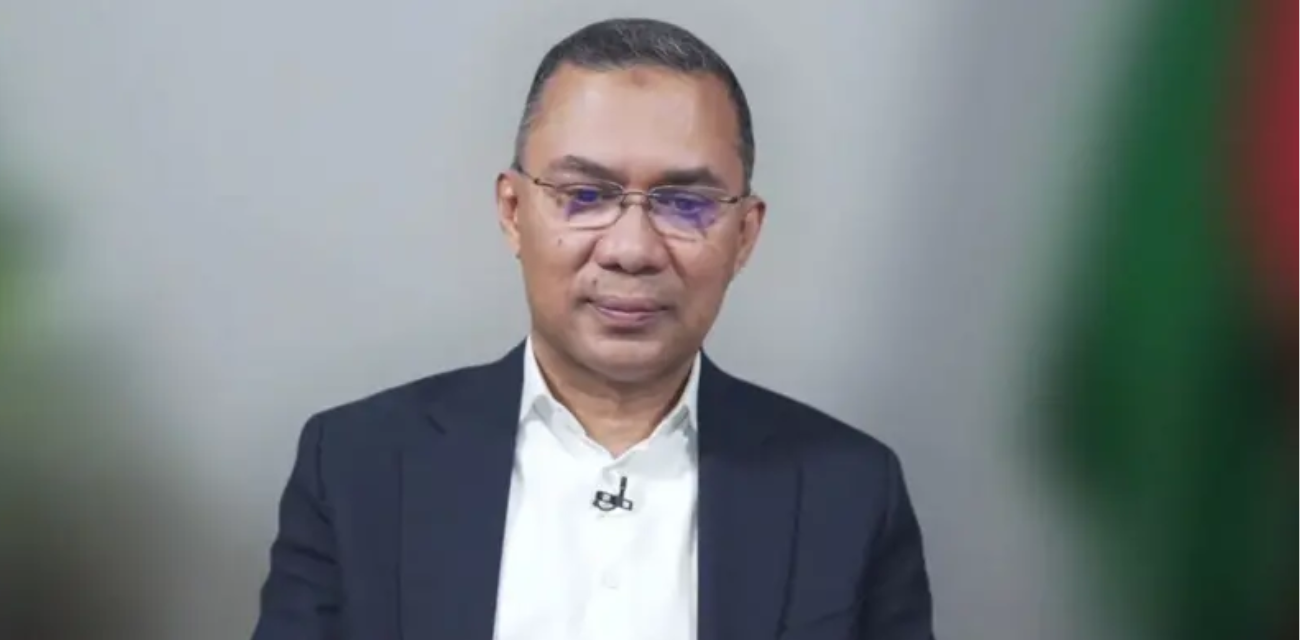
In his first major interview in nearly two decades, BNP’s Acting Chairman Tarique Rahman told BBC Bangla he will “soon” return to Bangladesh and contest the upcoming election.
While evading a direct declaration of his Prime Ministerial candidacy, he stated the party would decide. He framed the July mass uprising as a people’s movement, deflecting the “mastermind” label.
Rahman pledged inclusive governance, addressed corruption allegations against his party, and asserted that those responsible for past atrocities, including the Awami League, must face legal—not political—accountability.
Context
Tarique Rahman’s interview comes at a critical juncture. An interim government is overseeing Bangladesh until elections scheduled for February, following the July 2024 mass uprising that ended the 15-year rule of the Awami League.
Rahman, living in London since 2008, has led the BNP in exile. His return is a pivotal question in Bangladeshi politics.
Historically, the BNP and Awami League have alternated power, but the last 17 years were marked by allegations of authoritarianism.
The BNP boycotted the 2014 election and was effectively sidelined in 2018, making this its potential re-entry into competitive politics.
The interview signals the BNP’s attempt to re-establish its narrative and project readiness to govern amid a transformed political landscape.
Editorial Intelligence Report
- Editorial Angle
- Source Credibility
- Ideological Leaning
- Sentiment
- Balance of Reporting
- Primary Sources Used
- Tone & Language
- Headline Accuracy
- International Relevance
- Watch Points (Bias/Risk)
Investigative / Political Analysis – The interview seeks to elicit clear positions on key political questions from a long-absent central figure.
High – BBC Bangla is a reputable international broadcaster. The interview was conducted by senior editors, lending credibility and structure.
Neutral – The questions are probing and balanced, challenging the interviewee on corruption, party discipline, and electoral strategy without apparent bias.
Cautious / Analytical – The tone is not celebratory of Rahman’s return but focused on understanding its implications for Bangladesh’s fragile democracy.
One-sided in voice (primarily Rahman’s perspective) – Reporting outlets add context but the interview format naturally lacks direct official counter-comments.
Direct Subject (Tarique Rahman) – The report is built entirely on his first-hand statements.
Formal / Probing – The language is professional, with questions that are direct and designed to extract specific commitments.
Reflects content – The original Bengali headline accurately centers on his promise to return and participate in elections.
High – Bangladesh’s political stability, election credibility, and the fate of its major parties are closely watched by India, China, the US, and the EU due to regional security and economic interests.
- Risk of providing an unchallenged platform;
- Reliance on subject’s self-serving narrative;
- Emotional framing around family persecution could overshadow policy discussion;
Business Implications
Tarique Rahman’s public positioning materially raises near-term political risk calculations for investors and diplomatic missions.
First, a credible pathway to elections (with a Feb 2026 window) reduces the uncertainty premium only if polls are seen as free and inclusive; otherwise, volatility could persist.
Second, high-profile returns and courtroom reversals signal political realignment; firms relying on government contracts should audit counterparty risk and reputational exposure.
Third, donor agencies and Western parliaments are already pressing for transparent processes; conditionality on aid, trade preferences, or technical cooperation could follow if elections or rule-of-law norms are questioned.
Fourth, remittance flows and labour migration corridors could face friction if political instability triggers tighter travel or vetting regimes.
Finally, short-term impacts: currency/sovereign risk upticks, higher borrowing costs for corporates, and tightened banking compliance due to perceived political-credit risks.
Businesses should scenario-plan (stable political transition, contested election, or prolonged unrest), stress-test supply chains for disruption in urban centres, and open direct lines with FSIs, insurers, and multilateral lenders to manage contingency liquidity or insurance needs.
Potential Angles to Monitor
- Interview the Interim Government’s Chief Adviser on the logistical and security preparations for Rahman’s return and the election.
- Seek reaction from Awami League leaders on Rahman’s allegations and his potential candidacy for PM.
- Discuss with security analysts the potential for intra-party friction and the challenges of reintegrating a long-exiled leader into the domestic political structure.
- Interview civil society and business leaders on their key policy questions for the BNP, focusing on economic recovery, inflation, and banking sector reforms.
Frequently Asked Questions
Additional Reading
BBC Bangla – ‘Will return home soon, ioin election’ – Tarique tells BBC Bangla
BNP – Profile of Tarique Rahman
Counterpoint – The High Stakes of Tarique Rahman’s Political Absence
AFP – Exiled Opposition Leader Condemns ‘Sham’ Bangladesh Election
AP News – Bangladesh court acquits Zia’s son and 48 others convicted in 2004 deadly grenade attack
Reuters – Bangladesh interim government head signals possible early election